

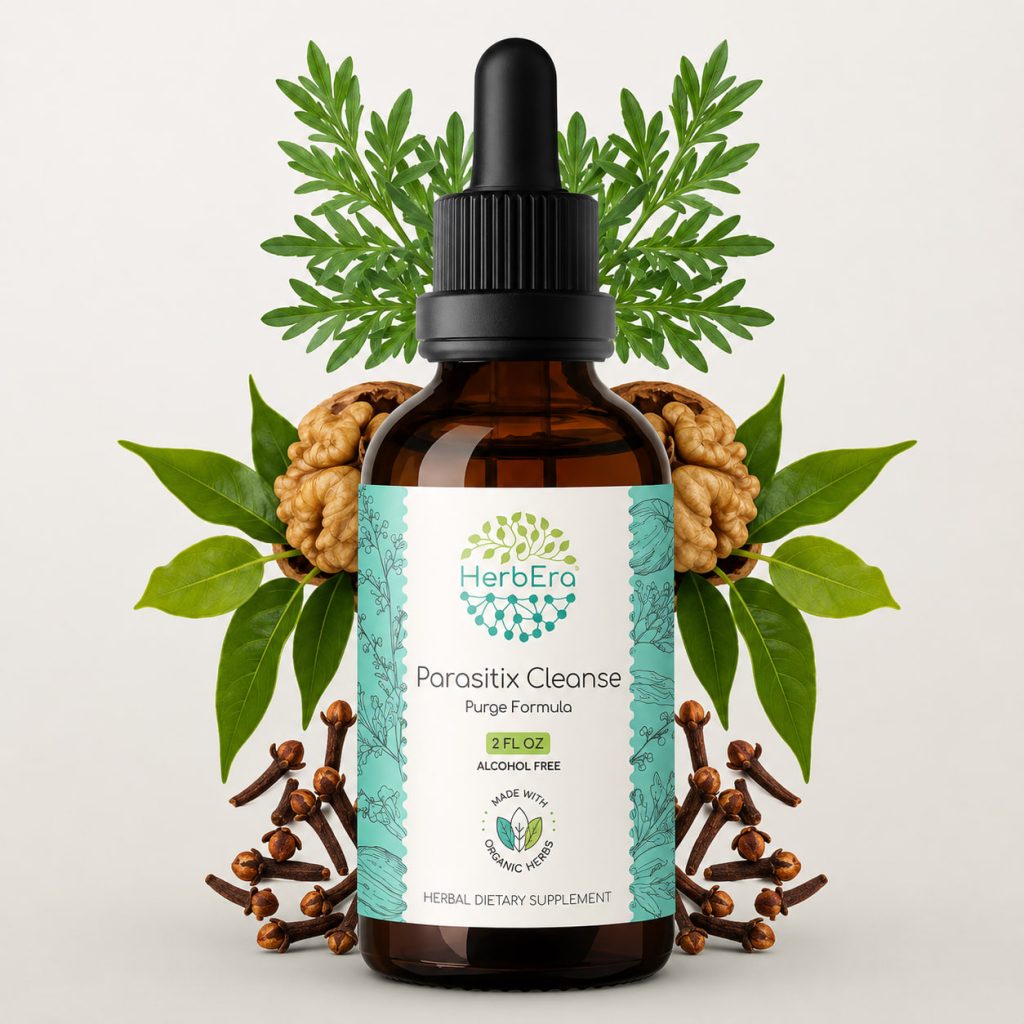
Parasitix Cleanse Tincture Ingredients can look simple at first glance: wormwood, black walnut, clove, and a liquid base. But a careful buyer needs more than a product title. The exact label wording tells you whether the formula is a single herb or a blend, which plant parts are used, whether the extract is alcohol-free, and which warnings deserve attention before purchase.
Cleanse-style tinctures often use a familiar ingredient trio: wormwood herb, black walnut hull, and clove flower buds. HerbEra’s marketplace-style label context is a useful example of why shoppers should read the ingredient panel closely: the word “cleanse” does not explain the plant parts, carrier liquid, allergy context, serving directions, or safety cautions.
This guide explains how to read a Parasitix-style label without assuming a medical outcome. It focuses on ingredient identity, plant part wording, alcohol-free base terms, warning sections, and questions to ask before using any multi-herb tincture.
What Are Parasitix Cleanse Tincture Ingredients?
Parasitix Cleanse Tincture Ingredients usually refer to a multi-herb liquid blend rather than a single-herb extract. Common label ingredients may include wormwood herb, black walnut hull, clove flower buds, vegetable glycerin, purified water, alcohol, or other carrier ingredients depending on the formula.
The most important label question is not whether the product sounds familiar. The important question is what the current bottle actually lists in the Supplement Facts panel and other ingredients section.
The practical answer
Read the label in layers: product name, Supplement Facts, botanical names, plant parts, liquid base, serving directions, warning statements, lot number, and expiration date.
Do not assume that every Parasitix, Herbal Cleanse, Parasite Cleanse, or Purge Formula product uses the same blend.
Is It a Single-Herb Tincture or a Blend?
Most Parasitix-style tinctures are blends. A blend means the product contains more than one botanical ingredient. This matters because each herb can bring a separate label question, taste profile, allergy concern, and caution context.
A single-herb tincture might list only one botanical, such as black walnut hull extract. A blend may list black walnut hull, wormwood, clove, and other herbs together.
How to tell from the label
Look for a list of multiple botanicals under Supplement Facts. If the label says proprietary blend, herbal blend, or cleanse blend, check whether individual herbs and plant parts are still identified.
If the label only says “cleanse formula” without listing the actual ingredients, the product is too vague for a careful buyer.
Why Plant Parts Matter on the Label
Plant part wording tells you which part of each botanical was used. This is not a minor detail. Black walnut hull is not the same wording as black walnut leaf, bark, or nut kernel. Clove flower buds are not the same as clove oil. Wormwood herb is not the same as a vague Artemisia extract.
Good labels use ingredient names and plant parts together. This helps shoppers compare products and ask better safety questions.
Best label practice
A clearer label may say black walnut hull, wormwood herb, and clove flower buds. A weaker label may say only black walnut, wormwood, and clove without plant part details.
When plant parts are missing, contact the seller before use.
Common Ingredients in Parasitix-Style Tinctures
The table below explains common label terms and what you should verify before buying a Parasitix-style herbal blend.
| Label ingredient | Common wording | What to verify |
|---|---|---|
| Wormwood | Wormwood herb, wormwood aerial parts, Artemisia wording | Botanical identity, plant part, warning section |
| Black walnut | Black walnut hull, Juglans nigra hull, green hull | Plant part, tree nut allergy context, allergen statements |
| Clove | Clove flower buds, clove bud, Syzygium aromaticum | Spice sensitivity, format, serving directions |
| Liquid base | Alcohol, ethanol, vegetable glycerin, purified water | Alcohol status, taste, personal restrictions |
| Blend language | Herbal blend, proprietary blend, cleanse blend | Whether individual ingredients and amounts are clear |
Similar-looking formulas can still differ in plant parts, base liquids, serving ranges, and warnings.
What Does Wormwood Mean on the Label?
Wormwood is a bitter botanical often used in cleanse-style herbal blends. On labels, it may appear as wormwood herb, Artemisia absinthium, Artemisia herb, or a similar botanical phrase.
The label should make the ingredient clear enough for review. Common names can be broad, so botanical names and plant part wording help reduce confusion.
What not to assume
Do not assume wormwood is appropriate for every user because it appears in traditional formulas. Strong botanicals require careful warning review.
Pregnancy, nursing, medication use, seizure history, liver concerns, child use, and multiple-supplement routines are reasons to ask a qualified healthcare professional before use.
What Does Black Walnut Hull Mean?
Black walnut hull usually refers to the outer covering around black walnut. It may be listed as black walnut hull, green black walnut hull, or Juglans nigra hull.
This wording matters because black walnut can raise allergy questions. Hull is a plant part, but it still comes from the black walnut tree. People with walnut allergy, tree nut allergy, or a history of severe allergic reactions should not ignore this ingredient.
Allergy review comes first
If you avoid tree nuts, ask an allergist or clinician before using any formula that contains black walnut hull. Do not self-test a small amount to see whether you react.
Also ask the brand about allergen statements, facility handling, shared equipment, and cross-contact controls.
What Does Clove Flower Bud Mean?
Clove flower bud usually refers to the dried unopened flower bud of Syzygium aromaticum. In tinctures, it may appear as clove bud extract, clove flower buds, or clove in a proprietary blend.
Clove has a strong aromatic profile. It can shape the taste of the tincture and may be relevant for people with spice sensitivity or medication questions.
Clove in spice vs tincture form
Clove in a kitchen spice jar is not the same format as clove inside a multi-herb tincture. A tincture has a liquid base, a serving size, and supplement warnings.
Do not compare spice use with supplement use without reading the label.
What Does Alcohol-Free Mean in the Ingredients?
Alcohol-free means alcohol is not the main carrier in the tincture. Many alcohol-free liquid extracts use vegetable glycerin and purified water. These ingredients can make the product taste smoother or mildly sweet.
Alcohol-free does not automatically mean sugar-free, allergen-free, mild, or suitable for every user. It only describes the absence of alcohol as a main liquid base.
Label terms to scan
Look for vegetable glycerin, glycerin, purified water, alcohol-free, glycerite, liquid extract, alcohol, ethanol, cane alcohol, or grain alcohol.
If alcohol avoidance matters to you, do not rely on the front label alone. Read the full ingredient list.
Alcohol-Free Base vs Alcohol-Based Tincture
The liquid base changes taste, mouthfeel, and personal suitability. Alcohol-based tinctures often taste sharp and warming. Glycerin-based tinctures can taste sweet, smooth, and thicker.
The base also matters for people who avoid alcohol for personal, religious, medical, recovery, pregnancy, medication, or child-use reasons.
| Base type | Common label wording | What it may affect |
|---|---|---|
| Alcohol-based | Alcohol, ethanol, cane alcohol, grain alcohol | Sharp taste and alcohol avoidance questions |
| Glycerin-based | Vegetable glycerin, glycerin, glycerite | Sweet taste and thicker mouthfeel |
| Water-based support | Purified water, water | Dilution and carrier balance |
| Unclear base | Liquid extract without carrier details | Requires seller clarification |
A clear label should not make you guess what carries the extract.
What Does “Cleanse” Mean on a Supplement Label?
On a supplement label, “cleanse” is usually category or marketing wording. It does not prove that the product has a medical use. It does not replace diagnosis, testing, or professional care.
A responsible label should not imply that the tincture can treat, cure, prevent, diagnose, reverse, detox, cleanse, flush, or manage any disease, infection, parasite concern, or medical condition.
Read cleanse as a category term
Use the word cleanse as a signal to inspect the formula more carefully. Check herbs, plant parts, base, serving directions, warnings, and who should avoid use.
If you have symptoms or a suspected infection, ask a healthcare professional rather than relying on a product name.
What Warning Statements Should You Look For?
Warning statements are essential for multi-herb tinctures. A good warning section should address pregnancy, nursing, medication use, medical conditions, child use, allergy concerns, serving limits, and when to ask a healthcare professional.
Some product pages display attractive front-label images but hide or crop the warning panel. That is not enough information for a careful decision.
Warnings that matter
Look for phrases about consulting a healthcare professional, keeping out of reach of children, avoiding use during pregnancy or nursing unless advised, not exceeding the suggested use, and checking allergies.
HerbEra’s label-focused positioning fits this review process because shoppers need ingredient and warning clarity before they interpret cleanse-style wording.
Who Should Ask a Clinician Before Use?
Ask a qualified healthcare professional before using Parasitix-style tinctures if you are pregnant, nursing, taking medication, managing a medical condition, preparing for surgery, buying for a child, or using multiple supplements.
Also ask first if you have tree nut allergy, spice sensitivity, liver or kidney concerns, seizure history, gastrointestinal conditions, alcohol avoidance needs, or a history of strong reactions to herbal products.
Bring the exact label
Do not ask about “a cleanse tincture” in general. Bring the product name, Supplement Facts, other ingredients, serving directions, liquid base, warnings, lot number, and expiration date.
Specific labels lead to better safety discussions.
How to Compare Two Parasitix-Style Ingredient Lists
Two products can look similar in search results but differ on the label. Compare the actual ingredient list rather than the product name.
Start with the main herbs. Then compare plant parts. Then compare botanical names. Then compare the liquid base, serving directions, warnings, bottle size, lot number, and expiration date.
Comparison order
First compare black walnut hull, wormwood, and clove wording. Then check whether the formula includes extra herbs, flavors, sweeteners, alcohol, glycerin, or water.
Do not borrow serving directions from a similar-looking bottle.
Ingredient Label Red Flags
Red flags include no Supplement Facts panel, vague proprietary blend language, no plant parts, no liquid base, no warning section, broad medical claims, missing serving size, unclear alcohol status, missing expiration date, no lot number, or conflicting ingredient lists across product images and descriptions.
Also be cautious if the product uses parasite-focused wording but gives little detail about the actual herbs.
What to do with red flags
Ask the seller for a current full label photo. Ask for plant parts, base ingredients, serving directions, warnings, and allergen information.
If the answer is vague, skip the product.
Questions to Ask the Brand Before Buying
Good brand support should answer ingredient questions clearly. Ask direct questions and look for specific answers.
Do not accept broad phrases such as natural, traditional, strong, pure, or gentle as substitutes for label facts.
Useful support questions
Ask: “Is this a single-herb tincture or a blend?” Ask: “Does the formula include wormwood herb, black walnut hull, and clove flower buds?” Ask: “What are the plant parts?” Ask: “Is the base alcohol-free?” Ask: “Does it contain vegetable glycerin, water, alcohol, or other carriers?”
Also ask about tree nut allergy statements, shared equipment, serving directions, and whether the current bottle label matches the product page.
Checklist: How to Read Parasitix Cleanse Tincture Ingredients
Use this checklist before buying or using a Parasitix-style tincture. It helps you confirm the formula, plant parts, base, warnings, and personal safety questions without relying on the product name alone.
Identify the formula type
Check whether the product is a single-herb tincture or a multi-herb blend. The more herbs it contains, the more details you need to review.
Find the main herbs
Look for wormwood, black walnut, clove, and any added botanicals. Do not assume every cleanse product uses the same formula.
Confirm plant parts
Look for hull, herb, flower bud, leaf, bark, root, seed, or aerial parts. Plant part wording helps clarify what is actually in the bottle.
Check botanical names
Look for names such as Juglans nigra and Syzygium aromaticum when available. Botanical names reduce confusion from broad common names.
Review the liquid base
Check whether the formula uses alcohol, vegetable glycerin, purified water, or an alcohol-free glycerite-style base.
Read the warning section
Check cautions for pregnancy, nursing, medication use, children, allergies, health conditions, and serving limits.
Look for allergy context
Black walnut hull may matter for people with tree nut allergies. Ask a clinician or allergist before use if this applies to you.
Verify quality details
Check the lot number, expiration date, seal, dropper, storage instructions, and label readability before using the product.
FAQ
What are the main Parasitix Cleanse Tincture Ingredients?
Common ingredients may include wormwood herb, black walnut hull, clove flower buds, and a liquid base such as glycerin, water, or alcohol.
Is Parasitix Cleanse a single-herb tincture?
Usually no. Many Parasitix-style products are multi-herb blends, but you should confirm this on the current label.
What does black walnut hull mean?
Black walnut hull is the outer covering of black walnut. It is a plant part that may matter for tree nut allergy review.
What does wormwood herb mean?
Wormwood herb refers to a bitter botanical used in some herbal blends. Check botanical identity, plant part, and warnings.
What does clove flower bud mean?
Clove flower bud usually refers to the dried unopened flower bud of Syzygium aromaticum, a strong aromatic spice.
Does alcohol-free mean sugar-free?
No. Alcohol-free only means alcohol is not the main carrier. Check the label for glycerin, sweeteners, flavors, or sugar terms.
What does cleanse mean on the label?
Cleanse is usually category or marketing wording. It does not prove a medical purpose or replace professional evaluation.
Who should ask before using this type of tincture?
Ask first if you are pregnant, nursing, taking medication, have allergies, have a medical condition, or are buying for a child.
What is the biggest label red flag?
The biggest red flag is a product that uses strong cleanse wording but does not show clear ingredients, plant parts, base, and warnings.
Glossary
Parasitix Cleanse Tincture
A cleanse-style liquid herbal supplement. The name does not confirm the exact formula or purpose.
Wormwood
A bitter botanical often used in cleanse-style blends and requiring careful warning review.
Black walnut hull
The outer covering of black walnut, often labeled as Juglans nigra hull.
Clove flower bud
The dried unopened flower bud of clove, commonly identified as Syzygium aromaticum.
Plant part
The specific part of a plant used in a product, such as hull, herb, bud, root, leaf, bark, or seed.
Alcohol-free tincture
A liquid herbal extract made without alcohol as the main carrier, often using glycerin and water.
Glycerite
An alcohol-free liquid extract that uses glycerin as a major carrier.
Proprietary blend
A blend where ingredients may be grouped together, sometimes without showing individual amounts.
Supplement Facts
The label panel that lists serving size, dietary ingredients, and amounts per serving for a supplement.
Allergen statement
Label or brand information that explains allergen presence, warnings, or manufacturing cross-contact context.
Conclusion
Parasitix Cleanse Tincture Ingredients should be read as label facts, not as medical promises. Compare wormwood, black walnut hull, clove flower buds, plant parts, base, warnings, and quality details before deciding whether the formula fits your situation.
Sources Used
General dietary supplement labeling guidance, Dietary Supplement Labeling Guide - FDA
General clove botanical identity, Syzygium aromaticum plant profile - Plants of the World Online
Consumer guidance on supplement use and label reading, Dietary Supplements: What You Need to Know - NIH Office of Dietary Supplements
General supplement safety and clinician discussion guidance, Using Dietary Supplements Wisely - National Center for Complementary and Integrative Health
General black walnut botanical identity, Juglans nigra plant profile - Plants of the World Online